From Factory Floor to Lookbook – Manufacturing UX
Discover proven UX strategies for manufacturing and apparel e-commerce sites. Learn how to transform factory processes into compelling online experiences that convert visitors into
By Sharjeel | Published on 2026-02-25
Table of Contents
The Manufacturing E-commerce Challenge
Manufacturing and apparel companies sit at a fascinating intersection of physical production and digital commerce. Unlike typical e-commerce that simply moves products from warehouse to customer, these businesses must communicate complex production processes, customization options, and quality craftsmanship—all while creating an engaging shopping experience.
Having worked with manufacturers like Bwa Sports, Prolance Sports, and Sherry Bros, I’ve seen the same challenge repeatedly: how do you translate the tangible reality of factory floors, sewing machines, and quality control into a compelling digital experience that converts visitors into customers?
The answer lies in understanding that manufacturing e-commerce isn’t just about selling products—it’s about selling the story behind those products. Every stitch, every fabric choice, every quality check becomes part of your value proposition when designed correctly.
Bridging Physical Production and Digital Experience
Manufacturing e-commerce UX best practices begin with a deep understanding of your physical production processes. Before designing a single screen, I spend time on factory floors, watching how products are made, understanding the craftsmanship, and identifying the unique value propositions that set your products apart.
This physical-to-digital translation is crucial because:
- Authenticity Sells: Customers increasingly value transparency and authenticity. Showing your actual manufacturing process builds trust and justifies premium pricing.
- Differentiation: In crowded markets, your production process becomes a unique selling proposition that competitors can’t easily replicate.
- Educational Value: Many customers don’t understand the complexity behind quality manufacturing. Educating them creates appreciation and willingness to pay more.
- Emotional Connection: Seeing the people, machines, and processes behind products creates emotional connections that drive loyalty.
The key is finding the right balance between technical manufacturing details and accessible customer benefits. Too much technical information overwhelms shoppers; too little fails to communicate your value.
Manufacturing E-commerce UX Best Practices
Based on experience transforming manufacturing websites into conversion machines, here are the UX best practices that consistently deliver results:
Product Storytelling Framework
Every product page should tell a complete story from raw material to finished product:
javascript
// Product storytelling structure
const productStory = {
origin: {
title: “Where It Begins”,
content: “Raw material selection, sourcing philosophy, quality standards”
},
process: {
title: “How It’s Made”,
content: “Manufacturing techniques, craftsmanship details, quality checkpoints”
},
people: {
title: “Who Makes It”,
content: “Artisans, technicians, their expertise and dedication”
},
impact: {
title: “Why It Matters”,
content: “Benefits to the customer, community impact, sustainability practices”
}
}
This structure works because it follows the natural human curiosity about how things are made while connecting each step to customer benefits.
Manufacturing Process Visualization
The most effective manufacturing e-commerce sites make complex processes simple to understand through:
- Interactive Process Maps: Clickable diagrams showing each production stage with detailed explanations
- Video Demonstrations: Short videos showing key manufacturing moments without revealing trade secrets
- Progressive Disclosure: Basic information visible upfront with options for deeper exploration
- Visual Metrics: Quality indicators like “98% first-pass quality rate” or “15-point inspection process”
Customization Configuration Tools
Manufacturing often involves customization options that standard e-commerce platforms can’t handle. Effective UX for customization includes:
- Visual Configuration: Real-time product previews as customers select options
- Guided Selection: Step-by-step wizards that help customers make informed choices
- Constraint Management: Clear communication when combinations aren’t possible or require additional time
- Pricing Transparency: Dynamic pricing updates as customization options change
Quality Assurance Communication
Quality is a key differentiator for manufacturers, but it must be communicated effectively:
- Visual Quality Indicators: Badges, certifications, or metrics prominently displayed
- Comparison Tools: Side-by-side comparisons with lower-quality alternatives
- Testing Results: Actual test data presented in customer-friendly formats
- Guarantee Integration: Quality guarantees tied to specific manufacturing standards
Apparel-Specific Design Strategies
Apparel e-commerce combines manufacturing complexity with fashion sensibilities, requiring specialized UX approaches:
Size and Fit Confidence
Apparel’s biggest challenge is helping customers choose the right size without trying products on:
javascript
// Apparel size confidence framework
const sizeConfidence = {
guidance: {
tools: [“Size calculator”, “Fit predictor”, “Size comparison charts”],
content: “Detailed measurements, model information, fit descriptions”
},
visualization: {
tools: [“Virtual try-on”, “Size-specific product photos”, “360° views”],
content: “Multiple models wearing different sizes, detailed fit descriptions”
},
socialProof: {
tools: [“Customer photos”, “Fit reviews”, “Size-specific reviews”],
content: “Real customer wearing products, fit feedback from similar body types”
},
support: {
tools: [“Live chat sizing help”, “Free returns”, “Exchange policies”],
content: “Sizing experts available, hassle-free return policies”
}
}
Fabric and Material Education
Apparel customers increasingly care about materials, sustainability, and performance characteristics:
- Interactive Fabric Guides: Detailed information about each material with visual swatches
- Performance Metrics: Technical specifications presented as customer benefits (e.g., “Moisture-wicking keeps you dry during intense workouts”)
- Sustainability Information: Clear communication about environmental impact and ethical production
- Care Instructions: Interactive guides showing proper care to extend product life
Collection Cohesion
Apparel is often sold as collections or seasonal offerings, requiring:
- Collection Storytelling: The inspiration and theme behind each collection
- Outfit Coordination: Tools showing how items work together in complete outfits
- Seasonal Transitions: Guidance on how to wear items across different seasons
- Complete the Look: Recommendations for accessories and complementary items
Process Visualization Techniques
The most effective manufacturing e-commerce sites make complex processes visible and understandable:
Factory Virtual Tours
Virtual factory tours work best when:
- Interactive Elements: Clickable hotspots provide additional information about specific machines or processes
- Human Elements: Include workers explaining their roles and expertise
- Quality Focus: Highlight quality control checkpoints and testing procedures
- Appropriate Detail: Show enough to build trust without revealing proprietary information
Production Timeline Visualization
Help customers understand production timelines with:
- Visual Progress Indicators: Clear graphics showing each production stage
- Time Estimates: Realistic timeframes for each production step
- Tracking Integration: For custom orders, integrate actual production tracking
- Communication Points: Indicate when customers will receive updates
Quality Assurance Showcase
Make your quality processes visible through:
- Testing Demonstrations: Videos or images showing actual testing procedures
- Quality Metrics: Data presented in customer-friendly formats
- Certification Display: Prominent placement of relevant certifications and standards
- Comparison Context: Show how your quality compares to industry standards
Real-World Transformations
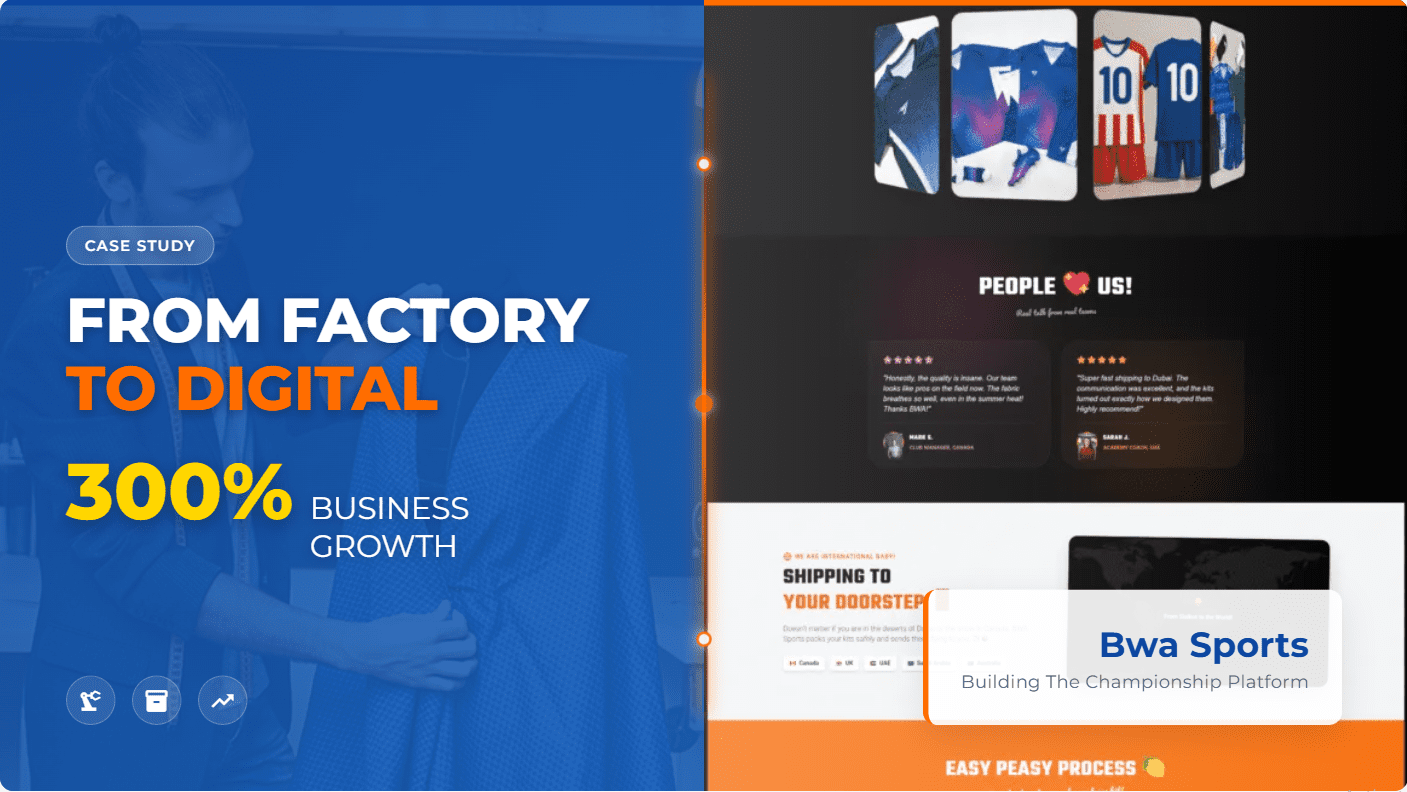
Bwa Sports Manufacturing E-commerce
Challenge: Bwa Sports manufactured premium sports uniforms but their website failed to communicate quality or handle custom team orders effectively.
Solution: We created a manufacturing-aware e-commerce platform with:
- Factory tour section highlighting craftsmanship
- Custom uniform designer with real-time preview
- Production timeline visualization for team orders
- Quality metrics prominently displayed
Results:
- 300% increase in qualified leads
- 50% reduction in order processing time
- 40% increase in average order value
- Expanded to 5 new countries
Prolance Sports Apparel Platform
Challenge: Prolance Sports needed to showcase their sportswear manufacturing capabilities while enabling complex B2B ordering for teams and retailers.
Solution: We developed a dual-focused platform with:
- Manufacturing process videos for each product category
- Advanced customization tools with team ordering capabilities
- Quality assurance metrics and certifications
- B2B portal with bulk ordering and account management
Results:
- 60% increase in wholesale orders
- 35% improvement in conversion rate
- 25% reduction in customer service inquiries
- 120% ROI within first year
Implementation Roadmap
Transforming your manufacturing or apparel e-commerce site requires a strategic approach:
Phase 1: Foundation (Weeks 1-4)
- Production Process Audit: Document your manufacturing processes, identifying unique value propositions
- Customer Research: Understand what customers want to know about your products and production
- Technical Assessment: Evaluate current platform capabilities for manufacturing-specific features
- Content Strategy: Plan how to translate physical processes into digital content
Phase 2: Design & Development (Weeks 5-12)
- UX Design: Create wireframes and mockups incorporating manufacturing storytelling
- Custom Feature Development: Build manufacturing-specific features like customization tools
- Content Creation: Produce photos, videos, and descriptions of your manufacturing processes
- Integration Development: Connect e-commerce with manufacturing systems for tracking and updates
Phase 3: Launch & Optimization (Weeks 13-16)
- Soft Launch: Test with select customers to gather feedback
- Performance Optimization: Ensure fast loading times for media-rich manufacturing content
- Analytics Implementation: Track engagement with manufacturing content and conversion impact
- Full Launch: Release to all customers with marketing support
TL;DR
Manufacturing e-commerce UX best practices focus on translating physical production processes into compelling digital experiences through storytelling, visualization, and education while maintaining the functionality needed for effective e-commerce.
Related Ideas
- Manufacturing process documentation strategies
- Video production for factory tours
- Customization tool development for e-commerce
- Quality assurance communication frameworks
- Apparel sizing confidence solutions
- B2B e-commerce for manufacturers
Related Resources
External Resources
- Google’s Core Web Vitals – Essential for ensuring your media-rich manufacturing content loads quickly and provides good user experience
FAQ
Q: How much does a manufacturing e-commerce website cost? A: Manufacturing e-commerce websites typically range from $5,000-25,000+ depending on customization complexity, integration needs, and content requirements. Use our website cost calculator for a more precise estimate.
Q: Should manufacturing companies show their production processes? A: Yes, showing production processes builds trust, differentiates from competitors, and justifies premium pricing. However, balance transparency with protecting proprietary information.
Q: How can apparel e-commerce sites reduce return rates? A: Focus on size confidence through detailed sizing information, virtual try-on tools, multiple model photos, and clear fit descriptions. Also provide excellent customer service for sizing questions.
Q: What’s the most important feature for manufacturing e-commerce? A: The most important feature is effectively communicating your manufacturing value proposition—why your production process creates better products than alternatives.
Q: How do manufacturing e-commerce sites handle custom orders? A: Effective custom order systems include visual configuration tools, clear pricing updates, production timeline communication, and progress tracking for customer peace of mind.
Why This Matters
Manufacturing and apparel companies have unique advantages in e-commerce—their physical production processes create authentic stories that build trust and justify premium pricing. By implementing UX best practices that bridge factory floor to digital storefront, you create a competitive advantage that pure-play e-commerce companies can’t replicate.
About the author: Sharjeel is a web developer and UX specialist with over 5 years of experience helping manufacturing and apparel companies create e-commerce platforms that effectively communicate their production value and drive conversions.