

Discover why traditional website quotes are often misleading and learn what to ask instead. Get accurate pricing with our transparent website cost calculator.
By Sharjeel | Published on 2026-02-13
Table of Contents
The Hidden Truth Behind Website Quotes
The website cost illusion is a phenomenon where businesses receive quotes that appear straightforward but contain hidden complexities and unexpected expenses. This creates a disconnect between initial expectations and final invoices, leaving many business owners frustrated and over budget.

I’ve seen this scenario play out countless times. A business owner gets three quotes for what seems like the same website: one for $1,500, another for $5,000, and a third for $12,000. They naturally wonder how there could be such a massive price difference for essentially the same product.
The truth is, they’re not looking at quotes for the same product at all. They’re comparing apples, oranges, and perhaps a few fruits they’ve never even heard of. The website cost illusion stems from the fact that most quotes don’t clearly communicate what’s actually included, what’s optional, and what might become necessary later.
Why Traditional Quotes Create Cost Illusions
Traditional website quotes create illusions for several reasons:
- Vague Descriptions: Many quotes use generic terms like “custom design” or “SEO optimization” without explaining exactly what these entail.
- Omitted Essentials: Critical components like hosting, security certificates, or ongoing maintenance are often excluded from the initial quote but become necessary later.
- Unclear Timeframes: Quotes rarely specify how many revisions are included or how long each phase will take.
- Hidden Technical Requirements: Complex integrations or custom functionality might be underestimated or completely overlooked in the initial assessment.
- Deliberate Underbidding: Some developers intentionally lowball quotes to win business, planning to upsell additional features later.
This creates a perfect storm of confusion where businesses can’t accurately compare proposals or budget effectively for their web projects.
The Real Cost Factors Developers Don’t Mention
After developing over 200 websites, I’ve identified several cost factors that rarely appear in initial quotes but significantly impact final pricing:
Technical Infrastructure
- Hosting requirements (different websites need different hosting levels)
- SSL certificates and security measures
- Third-party integrations (payment gateways, CRMs, etc.)
- Backup systems and disaster recovery planning
Content Creation
- Professional copywriting (often assumed the client will provide)
- Stock photography or custom photography
- Video production
- Content migration from existing sites
Ongoing Maintenance
- Security updates and patches
- Performance optimization
- Bug fixes and troubleshooting
- Feature updates and improvements
Scalability Considerations
- Capacity for increased traffic
- Ability to add new features
- Integration with future marketing tools
- Mobile responsiveness across all devices
These factors can add anywhere from a few hundred to several thousand dollars to a project’s cost, yet they’re rarely discussed during initial quoting.
Questions That Reveal True Website Costs
To cut through the website cost illusion, you need to ask specific questions that force transparency:
1. “What exactly is included in this price?”
Ask for a detailed breakdown of every deliverable. If a developer can’t provide this, it’s a red flag.
2. “What potential additional costs might arise?”
Request a list of possible extra expenses that could occur during development.
3. “How many revisions are included?”
Clarify exactly how many rounds of changes are covered before additional charges apply.
4. “What happens after the site launches?”
Ask about post-launch support, maintenance, and associated costs.
5. “What technical requirements might affect the price?”
Inquire about hosting needs, security measures, and third-party integrations that could impact cost.
6. “Can you provide examples of similar projects and their final costs?”
Ask for case studies of comparable websites with their actual final invoices, not just initial quotes.
These questions force developers to be more transparent and help you understand the true scope of your project.
A Better Approach: Transparent Pricing
At DevGuruX, we’ve adopted a radically transparent approach to pricing that eliminates the website cost illusion. Instead of vague quotes, we provide:
- Detailed Breakdowns: Every component of your website is listed with its individual cost.
- Optional Add-ons Clear Pricing: Additional features are presented as optional items with transparent pricing.
- No Hidden Costs: We include hosting recommendations, security measures, and maintenance options in our initial discussions.
- Fixed-Price Options: For standard features, we offer fixed pricing that won’t change unless the scope changes.
- Clear Revision Limits: We specify exactly how many revisions are included and what additional revisions cost.
This approach builds trust and helps our clients make informed decisions about their web development investments.
Using Tools to Cut Through the Illusion
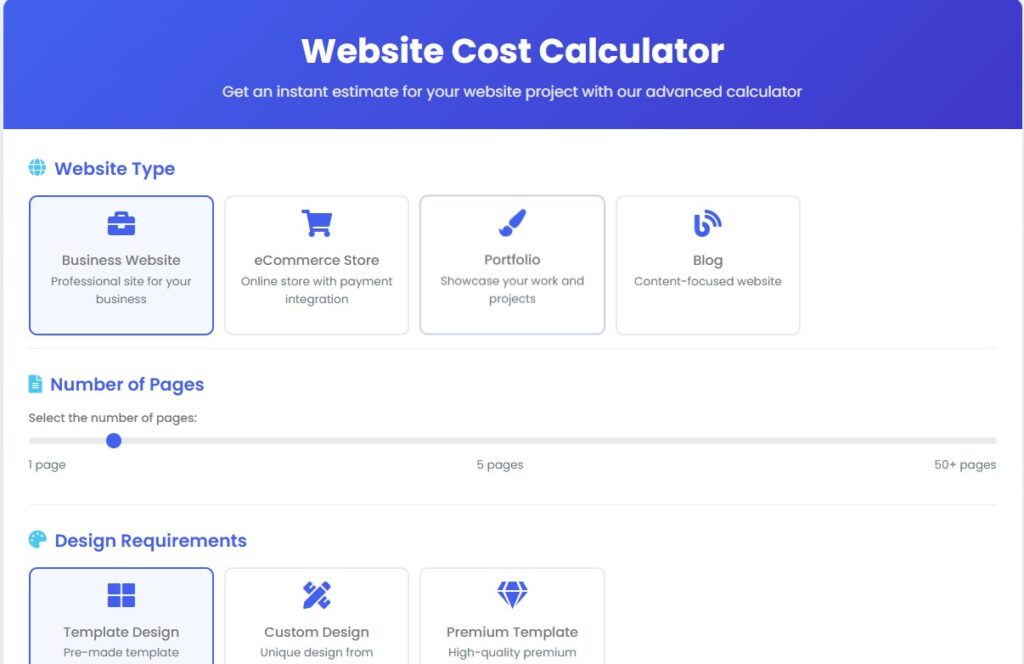
To further combat the website cost illusion, we developed a website cost calculator that provides transparent estimates based on actual features and requirements.
Unlike traditional quotes that might be deliberately vague, our calculator:
- Breaks down costs by feature (design, development, hosting, etc.)
- Shows optional add-ons with clear pricing
- Provides estimates for maintenance and ongoing costs
- Updates in real-time as you select different options
This tool helps you understand exactly what you’re paying for and why, eliminating the surprises that often accompany website development projects.
TL;DR
Traditional website quotes often create cost illusions by being vague about what’s included, omitting essential components, and hiding potential additional expenses. Ask specific questions about deliverables, revisions, and potential extra costs to reveal the true price of your website project.
Related Ideas
- Hidden costs in e-commerce website development
- Website maintenance pricing breakdown
- How to compare web development proposals effectively
- Questions to ask before hiring a web developer
- Red flags in website quotes
- Budget planning for website projects
Related Resources
External Resources
- Web.dev Performance Metrics – Understanding how website features impact performance and cost
FAQ
Q: Why do website quotes vary so much between developers? A: Quotes vary because developers include different features, have different overhead costs, use different technologies, and may have different levels of experience. The key is to ensure you’re comparing like-for-like features and deliverables.
Q: What’s the average cost of a small business website? A: A basic small business website typically costs $1,500-5,000, while more complex sites with custom functionality can range from $5,000-15,000+. Use our website cost calculator for a more precise estimate based on your specific needs.
Q: Should I choose the cheapest quote for my website? A: Not necessarily. The cheapest quote often excludes essential features or uses lower-quality solutions. Focus on value rather than price alone, considering long-term maintenance, scalability, and potential hidden costs.
Q: How can I avoid hidden costs in website development? A: Ask for detailed breakdowns of all deliverables, inquire about potential additional costs, clarify revision limits, and discuss post-launch maintenance requirements upfront.
Q: What should be included in a comprehensive website quote? A: A comprehensive quote should include detailed feature descriptions, design mockups, development specifications, number of revisions, hosting recommendations, security measures, post-launch support, and clear timelines for each phase.
Why This Matters
Understanding the website cost illusion empowers you to make informed decisions about your web development investment. By asking the right questions and demanding transparency, you can avoid budget overruns, ensure you get the features you need, and build a website that truly serves your business goals without financial surprises.
About the author: Sharjeel is a web developer and SEO specialist with over 5 years of experience helping businesses navigate the complex world of website development. He’s passionate about transparent pricing and helping clients make informed decisions about their digital investments.