
What Makes a Professional Business Website Look Trustworthy?
In the physical world, business trust is established through clean retail spaces, professional attire, eye contact, and clear signage. Online, your website has to do all of that heavy lifting in a fraction of a second.
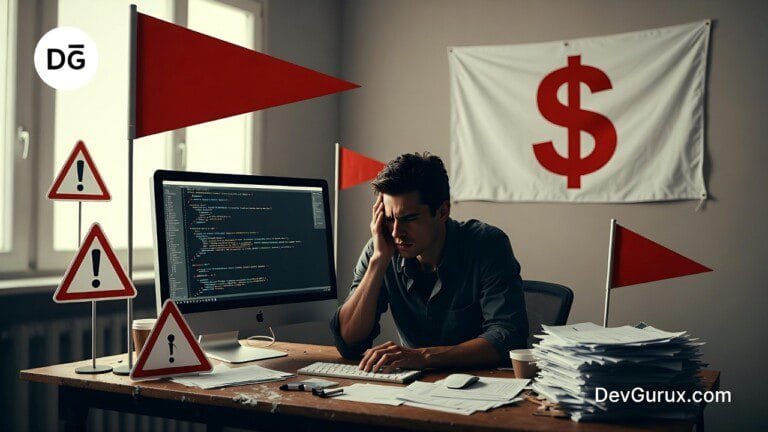
When a user lands on your home page, their brain performs an instant, subconscious audit. They aren’t just looking at your products or reading your copy; they are evaluating your credibility. If your site feels outdated, displays visual errors, or lags while loading, visitors will quietly close the tab and head straight to a competitor.
Building a highly successful professional business website isn’t about using flashy animations or bragging about your accomplishments. True digital trust is built on a foundation of clean code, consistent styling, solid security, and clear conversion paths.
Whether you are starting from scratch with custom website design development or planning a strategic website redesign, this guide breaks down the visual, technical, and psychological elements that establish ultimate credibility online.
Table of Contents
1. The Visual Trust Index: Eliminating Subconscious Red Flags
Subconscious visual bias is incredibly powerful. Before a visitor reads a single sentence on your page, they evaluate your brand’s authority based on visual consistency, typography, and spacing.
Typographic and Spatial Harmony
A messy, cluttered layout is an immediate red flag. Professional websites rely on a structured grid system, consistent font pairings, and generous breathing room (whitespace).
When a layout lacks breathing room, users feel overwhelmed. The information should flow naturally, guiding the reader’s eye from key value propositions down to clear call-to-action buttons. Ensuring your text adapts fluidly across all devices using tailored responsive design standards is crucial for maintaining this visual balance.
Avoiding Generic Stock Assets
Nothing kills digital trust faster than generic, overused stock photos of models shaking hands in a generic boardroom. Modern consumers easily spot these superficial assets, which can make your business look distant or artificial.
Instead, display authentic, original images of your workspace, your actual team members, and real projects. If you are a contractor, showcase crisp, high-resolution before-and-after project galleries. If you run a service brand, feature professional portraits of your consultants. This humanizes your company and instantly builds personal connection.
Common Mistake
Using mismatched visual elements across different landing pages. If your services page uses a completely different header style, font family, or color palette than your blog posts, visitors will feel like they have accidentally left your site—causing immediate user anxiety.
2. Performance as a Trust Signal: Why Speed Equals Credibility
Many business owners treat loading speed purely as a technical SEO requirement. In reality, page speed is one of the most powerful trust indicators your site can have.
If your website takes longer than three seconds to load, you aren’t just losing search engine visibility—you are actively destroying consumer confidence. A slow, laggy interface signals to visitors that your business is unmaintained, unpolished, or built on outdated infrastructure.
[User Taps Your Link]
         │
         ├───► Bloated Template (8.2s Load) ───► "Unprofessional, I'm leaving." (User Abandons)
         │
         └───► Optimized Custom HTML (0.8s) ───► "Professional and reliable." (User Stays)
For companies built on content management frameworks, securing professional wordpress speed optimization services ensures your pages render instantly. Eliminating heavy visual assets, optimizing SQL databases, and setting up clean script pathways keeps your user experience fast, responsive, and reliable.
3. Social Proof & Direct Validation Metrics
To believe your marketing claims, online prospects need independent, third-party validation. This makes social proof a cornerstone of digital conversion design.
Integrating Verifiable Review Badges
Do not simply type out plain text testimonials that anyone could have written. To build genuine trust, integrate live review widgets that pull verified feedback directly from trusted third-party platforms like Google Business Profile, Trustpilot, or industry-specific directories.
Displaying recognized trust emblems on your site helps visitors quickly verify your real-world reputation, turning casual visitors into confident, qualified leads.
Publishing Real Case Studies
Go beyond brief testimonials. Publish detailed, structured case studies that detail your real-world problem-solving process.
Break each project down systematically: outline the initial client challenge, detail your custom technical solution, and present the final measurable results. Referencing real-world case studies proves your professional competence and demonstrates exactly how you deliver real-world business value.
4. Technical Security & Shielding User Data
You cannot build a reputable brand on an insecure foundation. If a browser displays a “Not Secure” warning next to your domain name, you instantly lose all visual credibility, regardless of how beautiful your layout looks.
=================================================================================
                     THE BULLETPROOF SECURITY INFRASTRUCTURE
=================================================================================
  [SECURE HTTPS PIPELINE] --> Encrypts form transfers & guards database tables.
  [OWASP CORE COMPLIANCE] --> Blocks automated injections & script exploits.
  [MAINTENANCE ROUTINE]   --> Continuous core updates keep systems robust.
=================================================================================
Establishing technical trust requires implementing robust safety standards:
- Deploy a valid SSL certificate across your entire domain structure.
- Enforce secure HTTPS connections to protect user data from interception.
- Limit site access points, secure input forms, and implement automated firewalls to shield your database from automated threats.
For growing businesses, deploying these protective measures during your website development in Calgary ensures your site remains highly resilient as your operations scale. Keeping your systems up to date with a structured website maintenance plan ensures consistent security, protecting both your customer data and your brand’s reputation.
5. The Mathematical Probability of Trust-Based Conversions
We can mathematically model how user trust, speed, and visual security signals directly influence your conversion rates. Let $P(C)$ represent the overall probability of a user converting on your site. We can model this probability with the following formula:$$P(C) = \frac{T_v \times S_e}{1 + e^{k(L – L_0)}}$$
Where:
- $T_v$ represents your visual design trust metric ($0 \le T_v \le 1$).
- $S_e$ represents your visible technical security signals ($0 \le S_e \le 1$).
- $L$ is your actual mobile loading time in seconds.
- $L_0$ is your target loading speed threshold (typically set at $2.0$ seconds).
- $k$ is a scaling constant representing user impatience.
This model shows that even if your visual layouts ($T_v$) and security configurations ($S_e$) are perfect, if your page load times ($L$) exceed your target threshold ($L_0$), the conversion probability $P(C)$ will drop sharply. This highlights why high-performance web engineering is essential for driving real-world business revenue.
To see how these performance and conversion metrics impact your bottom line, run your metrics through our interactive Revenue ROI Calculator.
6. Frequently Asked Questions (FAQs)
What is the single most important trust factor on a business website?
While overall credibility is a blend of several factors, visible technical security—starting with a secure HTTPS connection and a valid SSL certificate—is the most critical. If a browser flags your site as “Not Secure,” visitors will leave immediately, regardless of your design quality.
Will a visual website redesign cause a drop in our existing search rankings?
Not if your project follows a strict technical SEO preservation process. Keeping your core URL structures clean, setting up precise redirects for any changing links, and building on a fast, optimized codebase protects and improves your search engine visibility.
How do custom API integrations build customer trust?
Setting up secure custom integrations ensures your contact forms, scheduling tools, and billing portals transfer customer data safely to your internal CRMs, protecting client privacy and streamlining your workflows.
Why are real team photos more effective than high-quality stock images?
Real photos humanize your brand and show the actual people behind your services. Stock images often look generic and artificial, which can make visitors skeptical about your business’s legitimacy.
How does mobile responsiveness affect user trust?
With over half of all web traffic coming from mobile devices, a layout that breaks, misaligns text, or hides key buttons on a phone looks highly unprofessional, driving users straight to your competitors.
What details should be included in a professional website’s footer to build trust?
A trustworthy footer should include your business’s legal name, physical address, direct phone number, active email link, copyright year, and direct links to your Privacy Policy and Terms of Service.
How can small businesses display trust signals if they don’t have many reviews yet?
Focus on showcasing detailed case studies, highlighting your professional certifications, displaying secure payment badges, and writing highly useful, educational blog posts that demonstrate your industry expertise.
How does a fast-loading website improve customer confidence?
A fast-loading site tells users that your business is modern, efficient, and well-maintained, creating a smooth and reassuring experience from their very first interaction.
Are interactive calculators useful for building credibility?
Yes. Providing transparent, upfront pricing through tools like our interactive Website Cost Calculator positions your brand as honest, reliable, and easy to work with.
What is the best way to handle negative reviews on a public website?
The most credible approach is to address feedback openly and professionally. Respond constructively, show your commitment to resolving issues, and highlight how you improve your services based on client input.
7. Turning Credibility Into Measurable Growth
Online trust isn’t a superficial design choice—it is a measurable business asset. By combining consistent styling, fast loading times, verifiable social proof, and robust data security, you build a digital presence that effortlessly converts visitors into loyal clients.
At DevGurux, led by expert web architect Sharjeel Bin Amir, we design and develop high-performance web systems engineered to rank well, load instantly, and build long-term trust.
Stop letting a slow, outdated website cost you valuable business leads. Take control of your digital reputation and build an asset that grows your brand.
Take the first step toward optimizing your platform. Explore our complete AI Automation integrations, check your project parameters using our Website Cost Calculator, or book a free discovery consultation with our team on our Contact page today.
Author Profile
Sharjeel Bin Amir
Founder of DevGurux & Technical Web Developer
Sharjeel Bin Amir is a professional web engineer, WordPress expert, and organic SEO strategist. He partners with scaling service brands and business owners to transform slow, unmaintained legacy sites into fast, highly secure, and conversion-optimized digital assets.