WooCommerce vs. Shopify for Calgary Retail & Boutique Brands
Most WooCommerce vs. Shopify comparisons online are written for a generic audience — anyone selling anything, anywhere. That’s not particularly useful if you’re a Calgary boutique or independent retail brand with a specific set of concerns: a manageable product catalog, a brand identity that matters more than raw catalog size, and a customer base that’s often local as much as it is online.
This is a different comparison than the one I’d write for a B2B manufacturer managing a complex catalog and wholesale pricing tiers — that’s a separate conversation with different priorities. This one is specifically for retail and boutique brands, using the SK Boutique rebuild, a Calgary fashion retailer, as the working example throughout.
Table of Contents
Why This Comparison Is Different for Boutique Retail
A B2B manufacturer choosing an ecommerce platform is usually optimizing for things like wholesale pricing tiers, complex product variants, and integration with existing ERP or inventory systems. A Calgary boutique or independent retail brand is usually optimizing for something different entirely: a distinctive brand presentation, straightforward checkout for a smaller, curated catalog, and strong local and organic search visibility to reach customers who may shop online but also want to know if you’re carrying something in-store.
Those are genuinely different priorities, and treating this as one universal platform decision misses what actually matters for a boutique specifically.
Did You Know? According to W3Techs, WordPress (which WooCommerce runs on) powers roughly 43% of all websites — meaning a large share of the web’s content and design talent, plugins, and support resources are built around it, which matters when you’re weighing long-term flexibility.
The SK Boutique Project: What Platform Choice Actually Affected
SK Boutique needed a site that could support worldwide shipping, present a strong, distinctive brand identity (not a generic storefront template), and give the owner real control over how products were merchandised and presented — without ongoing platform fees eating into margins on a curated, smaller catalog.
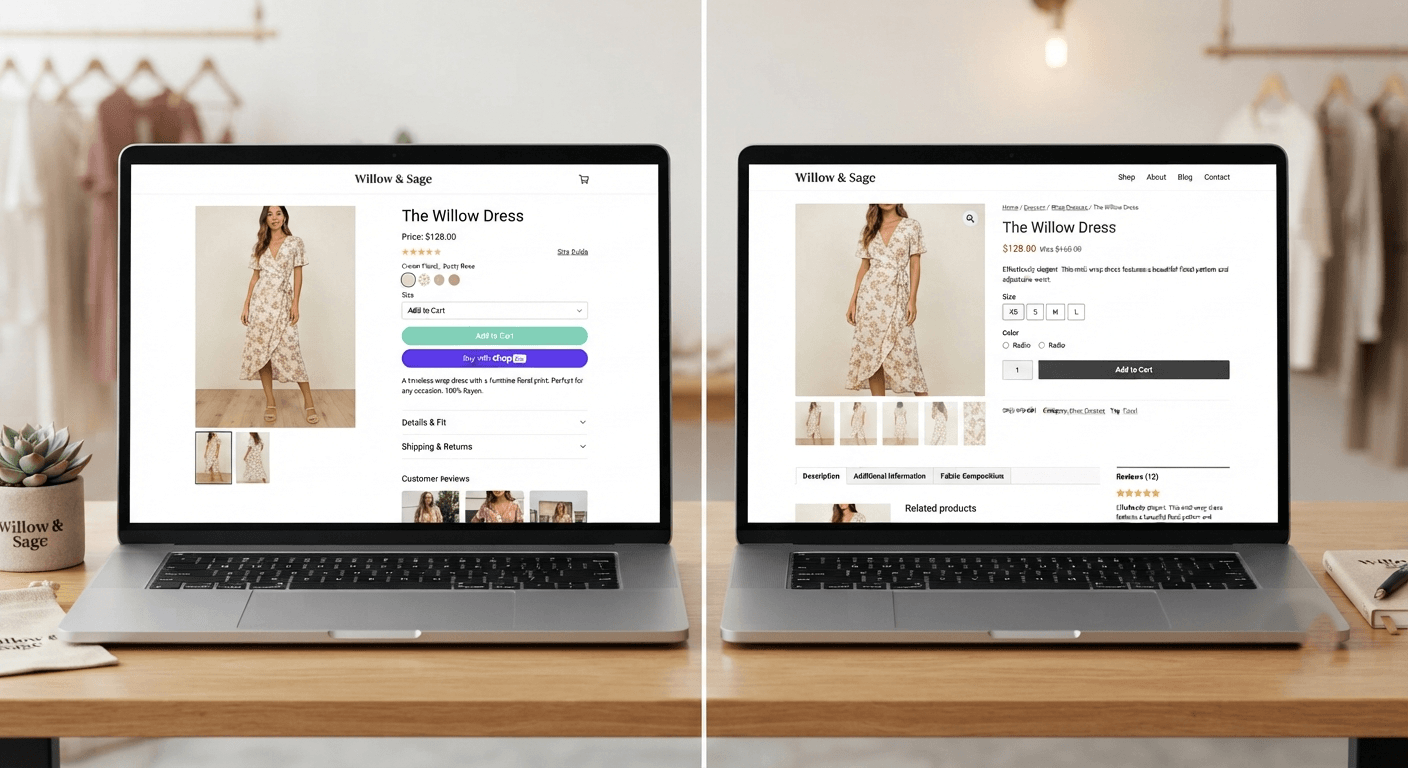
The build used WooCommerce specifically because it gave full design control over the brand presentation (rather than working within a template ecosystem), no forced monthly platform fee beyond hosting, and complete ownership of the site and its data. The result supported worldwide shipping with a checkout and product presentation built specifically around the brand rather than adapted from a generic template. See the full case study →
WooCommerce for a Calgary Boutique: Strengths and Tradeoffs
Where WooCommerce genuinely wins for boutique retail:
- Full design control — the storefront can look exactly like the brand, not a recognizable theme with swapped colors.
- No mandatory monthly platform fee — you pay for hosting and (if needed) development, not a per-month platform subscription on top of transaction fees.
- You own the site and the data outright — no risk of a platform policy change affecting how your store operates.
- Strong SEO control — WooCommerce runs on WordPress, which gives deep control over technical SEO, content, and blog integration in a way that supports genuine content marketing alongside the store.
Where it asks more of you:
- Requires more setup and ongoing technical care — updates, security, and hosting are your responsibility (or your developer’s), rather than fully managed by the platform.
- Less “batteries included” — some features that are native to Shopify (certain checkout optimizations, app-store simplicity) require more deliberate setup in WooCommerce.
Shopify for a Calgary Boutique: Strengths and Tradeoffs
Where Shopify genuinely wins:
- Fully managed hosting and security — you’re not responsible for server-level maintenance.
- Fast initial setup for a straightforward store, especially for an owner who wants to manage everything themselves with minimal technical involvement.
- A large app ecosystem for common retail needs (reviews, loyalty programs, upsells) with generally simple installation.
Where it asks more of you:
- Ongoing monthly platform fee, on top of payment processing fees, which compounds over years of operation.
- Less design flexibility within Shopify’s theme architecture compared to a fully custom WooCommerce build.
- Content and blog SEO capability is comparatively limited next to WordPress’s ecosystem, which matters if content marketing is part of your growth plan.
Side-by-Side Comparison for Retail and Boutique Use Cases
| Factor | WooCommerce | Shopify |
|---|---|---|
| Ongoing platform fees | None mandatory (hosting only) | Monthly subscription required |
| Design flexibility | Full custom control | Theme-constrained, though customizable |
| Setup and maintenance responsibility | Higher (yours or your developer’s) | Lower (managed by Shopify) |
| SEO and blog content control | Strong (full WordPress ecosystem) | More limited |
| Best for | Boutiques wanting a distinctive brand presence and long-term cost control | Owners wanting the fastest, most hands-off setup |
| Data and site ownership | Full ownership | Platform-dependent |
Where SEO and Brand Control Tip the Decision
For a boutique brand specifically, two factors tend to matter more than they might for a larger retailer: how distinctive the site looks, and how well it can support organic search growth over time through blog content, lookbooks, or style guides tied to product pages.
WooCommerce’s foundation on WordPress makes it a stronger fit when content marketing — style guides, seasonal lookbooks, brand storytelling — is part of the growth strategy, since the blog and store share the same technical ecosystem rather than being bolted together. If your plan is closer to “just get the store live and let paid ads or existing following drive traffic,” Shopify’s faster setup may be the better tradeoff.
Pro Tip: If differentiation is core to your brand — which it usually is for a boutique competing against big-box retail — weigh design flexibility more heavily than setup speed. A store that looks like every other Shopify boutique in the same theme undercuts the exact thing that’s supposed to set you apart.
Product Page Design for Boutique and Fashion Retail
Regardless of platform, the product page itself is where boutique conversions actually happen — and it needs specific attention beyond whatever the platform provides by default.
- Multiple, high-quality product images, including on-model shots where relevant — boutique and fashion buyers rely heavily on visual detail before purchasing.
- Clear sizing and fit information, ideally with a size guide rather than a generic size chart pulled from a template.
- Honest stock and restock information — “back in stock” notifications build trust and repeat visits rather than a dead “out of stock” page.
- Fast mobile load times, since a large share of boutique browsing happens on mobile, often via social media referral traffic.
Common Mistakes When Choosing a Platform
- Choosing based on what a competitor uses, without weighing your own catalog size, growth plans, or content marketing intentions.
- Underestimating ongoing platform fees over several years when comparing Shopify’s subscription cost against WooCommerce’s hosting-only model.
- Picking a generic theme with no customization, which undercuts brand differentiation regardless of platform.
- Ignoring SEO and content plans at the platform decision stage, then discovering later that the chosen platform limits blog integration or technical SEO control.
Decision Framework: Which Platform Fits Your Boutique
| If your priority is… | Consider |
|---|---|
| Maximum brand differentiation and full design control | WooCommerce |
| Fastest possible setup with minimal technical involvement | Shopify |
| Long-term cost control on a growing catalog | WooCommerce |
| Content marketing (blog, lookbooks) tied closely to product SEO | WooCommerce |
| A very simple, small catalog with no plans for content marketing | Either platform can work — Shopify may be faster to launch |
How I Approach These Projects
- Understand the catalog size and growth plan first — a ten-product boutique and a two-hundred-product retailer have different real needs, regardless of brand style.
- Weigh content marketing plans honestly — if blog content, lookbooks, or SEO-driven growth matter, that shapes the platform decision directly.
- Build the storefront around the brand, not a generic template — this is where WooCommerce’s flexibility specifically pays off for boutique clients.
- Set up clean product page structure: sizing, imagery, stock status, and mobile performance, regardless of platform.
- Plan for ongoing maintenance if going the WooCommerce route, since you’re responsible for updates and security rather than a fully managed platform.
This is the exact reasoning behind the SK Boutique build — see the full case study, browse the ecommerce industry page, or get a starting estimate for your own store.
FAQ
Is WooCommerce or Shopify better for a small boutique? It depends on priorities — WooCommerce generally wins on design flexibility, SEO control, and long-term cost, while Shopify wins on setup speed and fully managed hosting. Neither is universally “better.”
Does WooCommerce cost less than Shopify long-term? Usually, yes, since WooCommerce has no mandatory monthly platform fee beyond hosting, while Shopify’s subscription compounds over years of operation — though WooCommerce may involve more upfront development and maintenance cost.
How did platform choice affect the SK Boutique project specifically? WooCommerce was chosen to support full design control over brand presentation, worldwide shipping capability, and complete ownership of the site and data without an ongoing platform subscription.
Is Shopify easier to manage for a non-technical boutique owner? Generally yes for day-to-day operation, since hosting and security are fully managed by Shopify — though this comes with less design flexibility and an ongoing subscription cost.
Does platform choice affect SEO for a boutique brand? Yes — WooCommerce’s foundation on WordPress typically offers stronger technical SEO and blog-content control, which matters more if content marketing is part of the growth strategy.
Is this comparison different for a B2B or manufacturing ecommerce business? Yes — a B2B manufacturer usually weighs wholesale pricing tiers, complex variants, and ERP integration more heavily, which is a different decision than what typically matters for a boutique or retail brand.
Can I switch platforms later if I start with the wrong one? It’s possible but involves real migration effort — product data, SEO rankings, and design all need to be rebuilt or carefully migrated, so it’s worth weighing the decision carefully upfront rather than planning to switch later.
Do I need custom development for either platform? Not necessarily for a very simple store, but boutique brands aiming for genuine differentiation usually benefit from custom theme or template work regardless of which platform they choose.
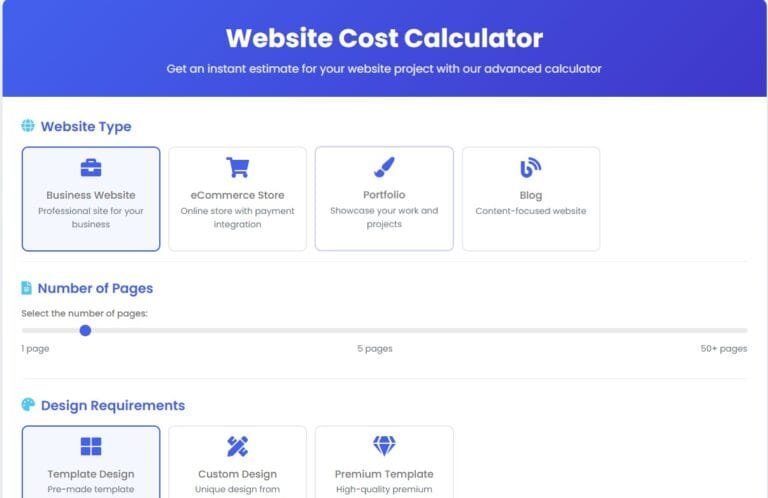
How much does a WooCommerce store cost compared to Shopify? WooCommerce often has lower ongoing costs (no mandatory subscription) but can involve more upfront development investment; Shopify has predictable monthly costs but less long-term design flexibility. Use the cost calculator for a specific comparison based on your catalog.
Which platform is better for worldwide shipping like SK Boutique needed? Both platforms can support international shipping; the deciding factor is usually design control and cost structure rather than shipping capability itself.
Do I need a developer to run a WooCommerce store, or can I manage it myself? Day-to-day product and content management can be handled by most non-technical owners; ongoing security updates and technical maintenance are best handled by a developer or a maintenance plan.
Conclusion
WooCommerce vs. Shopify isn’t a universal question with one right answer — for a Calgary boutique or retail brand specifically, it comes down to how much you value full design control and long-term cost savings versus fast, fully managed setup. The SK Boutique project is a working example of what WooCommerce’s flexibility can deliver for a brand that needed distinctive presentation and worldwide shipping without an ongoing platform fee eating into margins.
If you’re weighing this decision for your own boutique or retail brand, read the full SK Boutique case study, browse the ecommerce industry page, or get a starting estimate for your specific catalog and growth plans. If you’d rather talk it through, reach out directly.
Written by
Sharjeel Bin Amir Founder of DevGurux · Freelance Web Developer, Calgary · WordPress Expert · AI Automation Specialist · SEO Consultant Read my full story →